- AI Visual Hub' Newsletter
- Posts
- AI in 2024: Trends, Challenges, and Opportunities
AI in 2024: Trends, Challenges, and Opportunities
Introduction
The AI Revolution
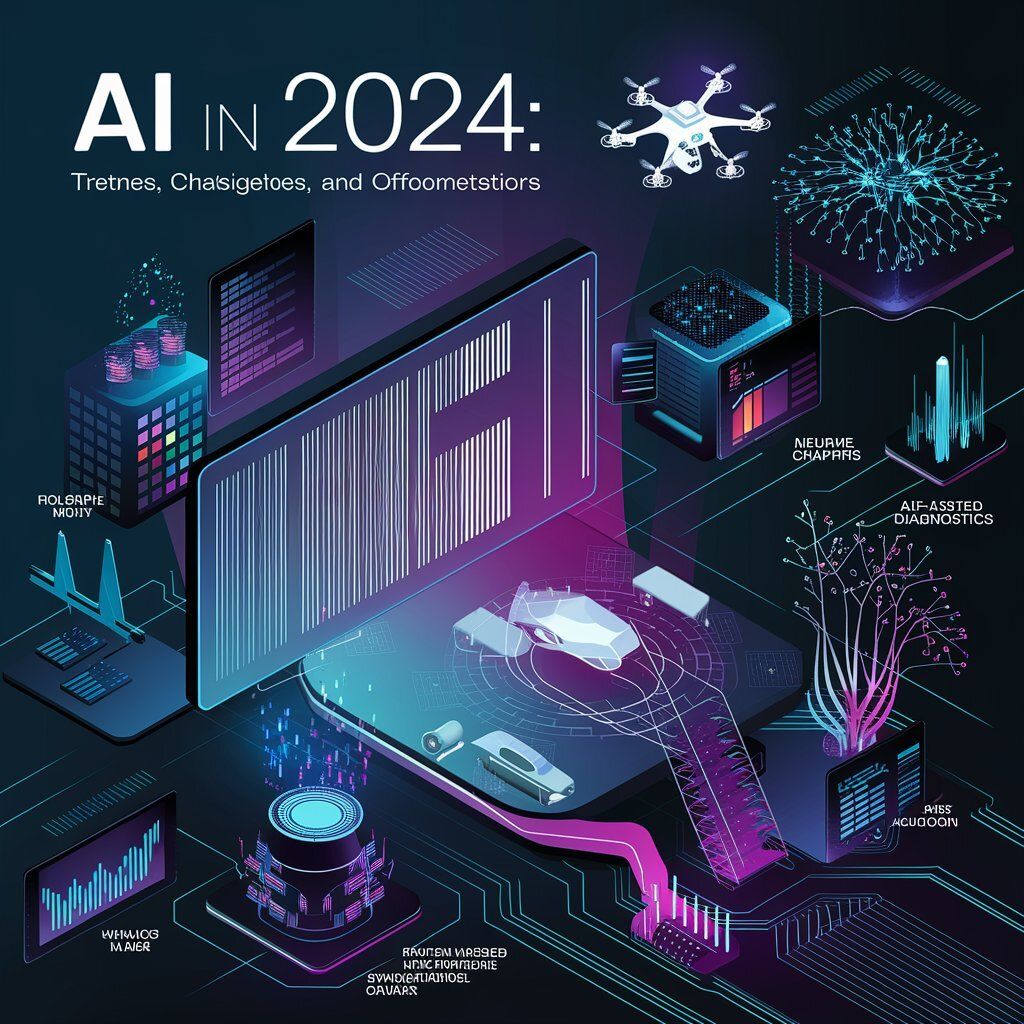
Artificial Intelligence continues to redefine the boundaries of technology in 2024. Advances in generative AI, autonomous systems, and machine learning have made AI an inevitable part of human life. This article introduces the latest trends, implications, and opportunities brought by AI, highlighting why it is so important to understand and responsibly embrace this transformative technology.
Key AI Technologies Shaping 2024
Accelerating development of AI in multiple fronts is changing industries and society. Here are some of the top technologies driving the charge:
Generative AI: Modelling from ChatGPT to DALL-E produces human-like text and creates hyper-real images that change the write, design, or creative work in marketing.
Autonomous Systems: Self-driving cars, delivery drones, and automated warehouses are changing logistics and transportation. For example, autonomous vehicles at Tesla have clocked over 3 billion miles of self-driven data, meaning very little human intervention.
Large Language Models: These models power everything from customer support chatbots to educational tutors, revolutionizing how information is accessed and communicated.
AI’s Impact on Industry and Everyday Life
AI is becoming the foundation of modern society, improving industries and personal experiences.
Healthcare
AI-assisted diagnosis allows for better detection of diseases. For example, Google Health's AI system was able to detect breast cancer with 89 percent accuracy, in some instances even better than human radiologists themselves. Using AI, personalized treatment plans have also become the norm.
Finance
Banks also employ AI in fraud detection, where the frequency of fraudulent transactions has decreased by 30% annually, and algorithm-driven trading furthers real-time investment decision-making.
Education
AI-based platforms such as Duolingo and Khan Academy support adaptive learning by adjusting content based on individual needs. According to studies, AI learning tools benefit learners by saving 25-30% more in learning efficiency than face-to-face instruction.
While AI offers immense benefits, it raises critical ethical and social concerns.
Bias in AI Systems: A 2023 MIT study revealed that facial recognition AI misidentified people of color 35% more than white people. Efforts to eliminate such biases remain a priority.
Privacy Concerns: The collection of user data for AI training sparks privacy debates, with laws like the EU’s GDPR aiming to protect individuals.
Global Standards: Countries are establishing guidelines for the use of artificial intelligence. For instance, the U.S. has passed a National AI Initiative Act, which emphasizes ethical AI development.
Statistics and Case Studies in AI Adoption
Market Growth of AI
The AI industry is projected to reach $900 billion by 2026, with a compound annual growth rate (CAGR) of 37% from 2021 to 2026.
Industry | AI Adoption Rate (2024) | Key Applications |
|---|---|---|
Healthcare | 65% | Diagnostics, virtual assistants |
Finance | 72% | Fraud detection, trading |
Education | 58% | Personalized learning tools |
Manufacturing | 62% | Predictive maintenance, robotics |
Case Study: AI in Healthcare
Mayo Clinic partnered with IBM Watson to implement AI in cancer treatment, reducing diagnostic times by 25% and improving patient outcomes by tailoring therapies.
Preparing for the AI-Driven Future
In an AI-dominated world, proactive adaptation by people and organizations is essential to thriving.
Upskilling: Professionals need to acquire AI literacy and programming languages like Python. Coursera reports a 45% AI-related course enrollment uptick in 2023.
Role of Education: Schools and universities are increasingly incorporating AI in curricula, thereby equipping them with future-ready skills.
Governments, too, play an important role by promoting AI-related research and initiating initiatives that bridge the growing digital divide.
Conclusion: Embracing AI Responsibly
AI’s transformative potential is unmatched, from advancing industries to enhancing personal productivity. However, ethical considerations, transparency, and regulations are crucial to ensuring that its adoption benefits society as a whole. By embracing AI responsibly, we can unlock its potential to solve global challenges and foster innovation in every aspect of life.
FAQs
1.Which are the best AI technologies of 2024?
Generative AI, Autonomous Systems, and Large Language Models will change industries in the near future.
2.What are the ways AI is addressing global problems?
AI helps fight climate change, expand access to healthcare, and improve education.
3.What are the risks and opportunities of AI adoption?
AI adoption will bring efficiency and innovation but increase ethical risk through bias and data privacy.
4.What are the implications of AI for jobs?
Automation of many jobs, along with new opportunities in tech and analytics through AI.
5.What are the essential skills for an AI-driven world?
AI literacy, coding expertise, and critical thinking will be key to navigating AI advancements.